


( Manufacturers & Exporters of Carpet & Pashmina)
www.namogurucarpet.com


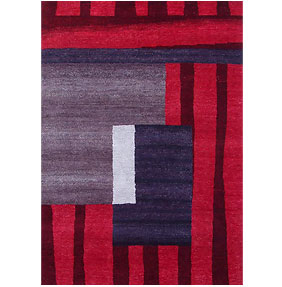


The historical origins of Tibetan rugs are unclear. It is believed that the art of rug weaving in this Himalayan region is part of age old tradition practiced primarily for use in the home. Originally rugs were produced for mats, door covers, bed covers and pillar rugs, which were placed around columns in Buddhist monasteries. Traditional Tibetan weaving generally reflect the influence of the Buddhist religion in Tibetan culture and art.
The rug weaving has also been one of the age-old traditional activities of the villages in the northern mountainous region of Nepal. But the commercial manufacturing began in Nepal along with the exodus of Tibetan refugees in Nepal in early 60s. Though the Nepalese as well as Sherpas were weaving rugs for generations, Europeans took interest in rug mainly to help Tibetan refugees settling in Nepal. In 1964 the first commercial shipment of woolen rugs (carpets) was made. Rug industry is now a major sector in creating job opportunity for both Tibetan refugees and Nepalese and for earning foreign currency as well.
Wool Processing:
Tibetan wool is sorted to pick out foreign materials and other forms of wool to have stable product. Then the wool is properly washed to remove fat and wax. After that the wool is dried in sunlight for two to three days.
Carding:
Wools are carded to bring into slivers for spinning yarn. Hand carding is still on demand to produce exotic program carpet. Tibetan wools and New Zealand are rightly blended during the carding process.
Spinning:
Wool spinning is done by hand charkha. The experienced Nepalese spinners are capable enough to produce course and even finer yarns for higher knot carpets.
Dyeing:
Dyeing was carried out in huge copper vessels. But with the introduction of machine dyeing better dye quality and fastness has been obtained. The use of synthetic dyestuffs has also provided a large spectrum color.
Weaving:
Carpet weaving is performed by hand using graphs & sketches. The carpet weaving is a creative task which is performed by three or four laborers according to the size of carpet. Carpet weaving is done with the help of yarn balls, scissors, iron-rod, levers, comb beater, etc. This process involves skills and craftsmanship.
Trimming:
The sharp designs and patterns are carved out by scissors from the woven carpet to give the luxurious look. The level of the pile is also made smooth according to the design.
Washing and Drying:
As a part of finishing process, carpets are washed with fresh water using household chemicals to keep free of germs and wipe out the gloomy appearance. Carpets are washed manually maintaining eco-friendly environments. The carpet is then dries out in sunlight for 4-5 days.
Stretching:
After washing the carpet has to be brought to the original loom-stage size by stretching. Stretching gives a good appearance to the carpet if it is twisted or under sized anywhere.
Finishing:
The carpet is given a final trimming of the unusual yarn and plucking to give the finished look. Designs and patterns are carefully checked before sending to packing but in case there's any error it is trimmed to and given a final touch.
Packing:
Finally the carpet is packed with the environment friendly packing material. After that the carpet is ready for export.
Namo Guru Carper Industries
P.O. Box: 19448, Gongabu, Kathmandu, Nepal
Phone: +977-1-4357120, 4358082
Fax:
+977-1-4358082
E-mail: info@namogurucarpet.com, tseten@mos.com.np.
Web: www.namogurucarpet.com
Site by: 